Racing at 10,000 Feet
When the Mountains Changed the Rules
What you’ll learn
Sam's race setup
________________________________
Wildfire smoke shortened one of Colorado’s most iconic mountain bike races—but the challenge of racing in Breckenridge remained as demanding as ever.
For 25 years, the Firecracker 50 has challenged mountain bikers with high-altitude climbs, technical singletrack, and some of the most rewarding trails in Colorado.
This year, however, the race looked different.
Concern over wildfire smoke drifting into the Rockies prompted organizers to shorten the event from its traditional 50-mile format to a single 25-mile lap. Instead of a long day of endurance racing, riders faced an all-out effort lasting roughly two hours.
The distance changed. The mountain didn’t.
Starting just below 10,000 feet in downtown Breckenridge, riders still had to climb relentlessly through thin air, navigate loose alpine trails, and race with precision where one mistake could cost valuable time.
For Haley Dumke and Sam Brown, it became a race defined as much by resilience as results.
Perhaps the biggest victory of the weekend wasn’t measured by a finishing position. It was simply being back on a mountain bike start line.
After months spent working back from injury, Haley arrived in Breckenridge carrying plenty of uncertainty—but also excitement. The day began with one of the Firecracker’s most unique traditions: a parade of riders rolling through Main Street before the racing began. Once the racing started, the atmosphere changed immediately.
The professional women’s field was quickly absorbed by the expert men’s category, creating a large group of nearly 40 riders before the field gradually split apart. Within a few miles, Haley found herself racing almost entirely alone. Rather than seeing that as a disadvantage, she settled into her own rhythm. Then something happened she hadn’t experienced in months.
She climbed patiently. She descended naturally. She managed recurring leg cramps while rediscovering confidence on trails she hadn’t raced since the 2024 Breck Epic. At mile 17, a spectator shouted that she was running fifth. Until then, she hadn’t known where she stood.
Suddenly, the race changed. “I was ready to throw caution to the wind for the last nine miles," Haley said later.
She attacked. Then, with only two miles remaining, disaster struck. A flat tire. CO₂ cartridge. Thirty seconds of riding. Another flat. Running down the trail. Help from another racer. Back on the bike. By the finish, Haley had slipped from fifth to eighth. Yet crossing the line felt like much more than an eighth-place finish.
Returning to the same Breckenridge trails where she’d enjoyed a breakthrough performance during the 2024 Breck Epic reminded her why she loves racing in the mountains. The result mattered. But being healthy enough to compete—and to feel competitive again—mattered even more.
Breckenridge doesn’t ease riders into mountain biking. It demands respect from the opening climb.
Starting at nearly 10,000 feet, every effort requires more from both lungs and legs. Long fire-road climbs give way to rocky singletrack, loose descents, and technical sections where momentum and bike handling become just as important as power.
One of the race’s defining features is Little French Gulch. The climb gains more than 600 feet in roughly a mile over loose rocks, steep pitches, and terrain that often feels more like an old creek bed than a trail. Even experienced racers know it’s a place where strength alone isn’t enough—you have to choose smart lines and stay composed under fatigue.
It’s the kind of terrain that reminds riders why Summit County has earned its reputation as one of Colorado’s premier mountain bike destinations.
🏔 Start: ~9,800 ft
⬆ Thin air means less oxygen
🚵 Technical climbs punish mistakes
💧 Hydration becomes critical
Like Haley, Sam hadn’t raced in Breckenridge since the 2024 Breck Epic and that race left both physical and emotional scars. Returning this year reminded him why he keeps coming back. "This is real mountain biking," Sam said.
From the gun, the pace reflected the shortened course. The professional men’s field climbed Boreas Pass Road in a tight group before the first attacks splintered the race entering singletrack.
Sam found himself among the front four riders. Soon, it became three. The decisive moment arrived on Little French Gulch. There, eventual winner Henry Nelson opened the gap that would prove decisive. Behind him, the battle for the remaining podium spots was only beginning.
After creating separation on a fast doubletrack descent, Sam closed on second-place rider Lasse Konecny following a crash in a loose corner. For a brief moment, Sam moved into second. But Breckenridge has a way of rewarding local knowledge.
Lasse recovered quickly and used his familiarity with the technical singletrack to regain the position before the final climb. Sam stayed on his wheel as long as possible, giving everything on the final pitches. The gap remained.
The final descent flowed toward the finish line, delivering one last reminder of why so many riders return to this race year after year.
Sam crossed the line in third place. For him, the podium meant more than the result itself.
The shorter race format had created a faster, more explosive competition than expected, yet his climbing strength proved he belonged at the front.
“I honestly think I could have contended for the podium even over the traditional two-lap course,” he reflected afterward.
2026 Firecracker 50 at a glance. Despite being shortened to a single lap because of wildfire smoke, the race remained one of Colorado’s toughest mountain bike events.
The 2026 Firecracker 50 may have been half its usual distance, but it never felt like half the challenge.
Wildfire smoke changed the format. Altitude remained relentless. The trails remained technical. The competition remained fierce.
For Haley, the weekend marked an emotional return to racing and a reminder that recovery isn’t measured only by results, but by rediscovering confidence and joy on the bike.
For Sam, it reinforced that climbing strength, smart racing, and persistence can still deliver a podium on one of Colorado’s most demanding mountain bike courses.
Summer racing continues next with Ned Gravel, where both riders will swap mountain bikes for drop bars—but carry the momentum, lessons, and confidence gained in Breckenridge.
RACE CONDITIONS
Altitude: 9,800–11,000+ ft
Distance: 25 miles
Course: High-alpine singletrack
Conditions: Wildfire smoke
Format: One lap
Difficulty: Expert
RACING ABOVE 10,000 FEET
✓ Less oxygen reaches your muscles
✓ Heart rate climbs faster
✓ Recovery takes longer
✓ Climbs feel dramatically steeper
✓ Technical mistakes happen more easily when fatigued
✓ Hydration becomes even more important
Organizers reduced the race to a single 25-mile lap due to concerns about unhealthy air quality caused by wildfire smoke affecting the Rocky Mountain region.
The Firecracker 50 takes place in Breckenridge, Colorado, with riders racing on a mix of high-altitude fire roads, alpine singletrack, and technical mountain bike trails.
The combination of nearly 10,000-foot elevation, sustained climbing, technical descents, and rugged terrain makes it one of Colorado’s most demanding mountain bike races.
Little French Gulch is one of the race’s signature climbs, gaining more than 600 feet in approximately one mile over steep, rocky terrain that challenges both fitness and technical riding skills.
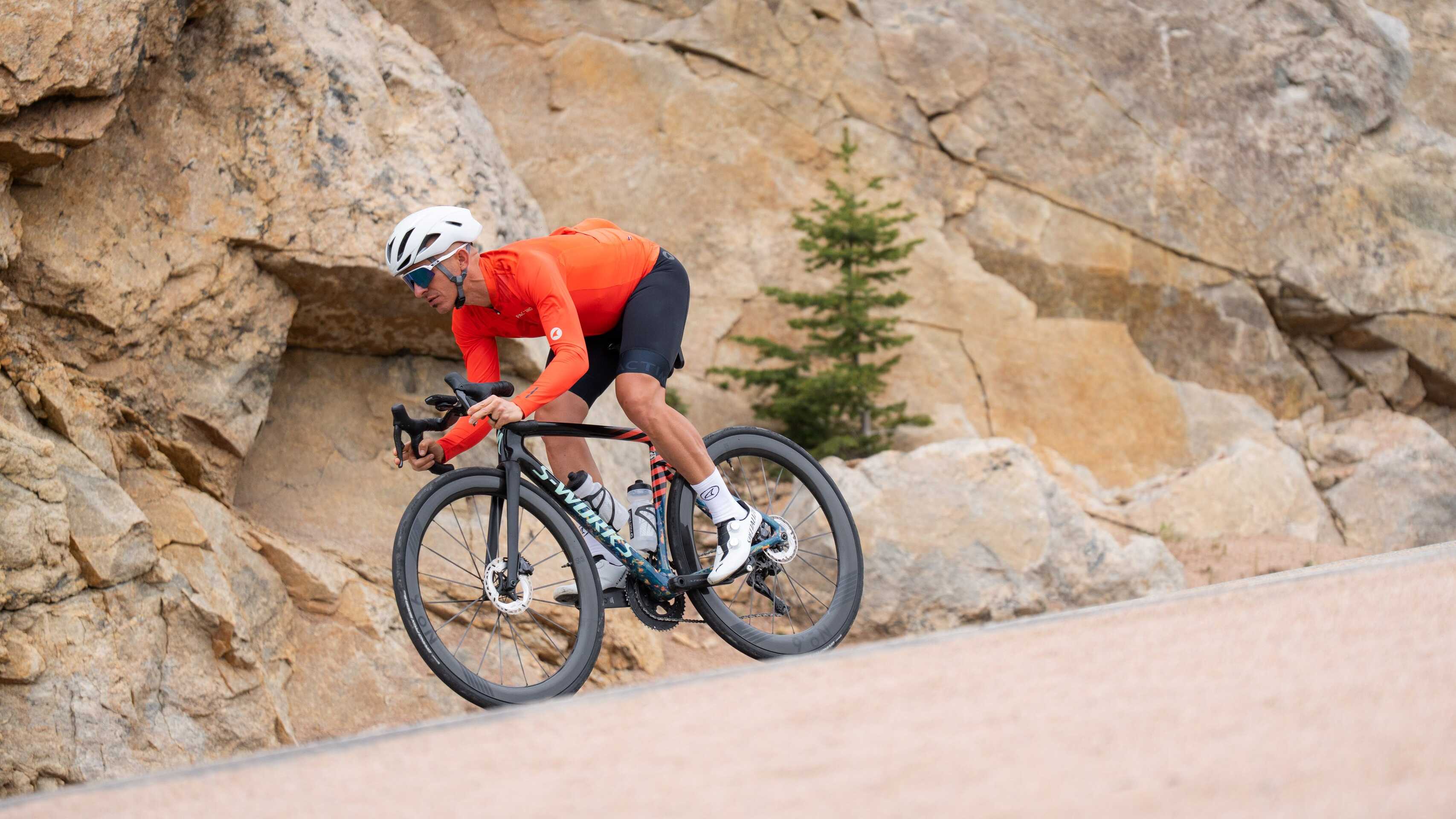
Sam raced the Firecracker 50 wearing the Pactimo Aero Mesh SS Flyte Suit, designed for high-output racing where aerodynamics, breathability, and all-day comfort matter. The lightweight, highly breathable fabric helps riders stay cool during long climbs at altitude, while the aerodynamic fit minimizes drag on fast descents and open sections of the course.
Whether you’re racing cross-country mountain bike events, marathon MTB races, or fast gravel events, the Aero Mesh SS Flyte Suit is built for riders looking to maximize performance without sacrificing comfort.
Many modern cross-country and marathon mountain bike races include long fire-road climbs, fast doubletrack, and high-speed sections where aerodynamics can make a measurable difference. An aero race suit like the Pactimo Aero Mesh SS Flyte Suit combines a streamlined fit with highly breathable fabrics, giving racers the efficiency they want without compromising comfort on technical terrain.
Follow Haley and Sam at @itshaleydumke and @sambrown.748
Photos by @jacestout