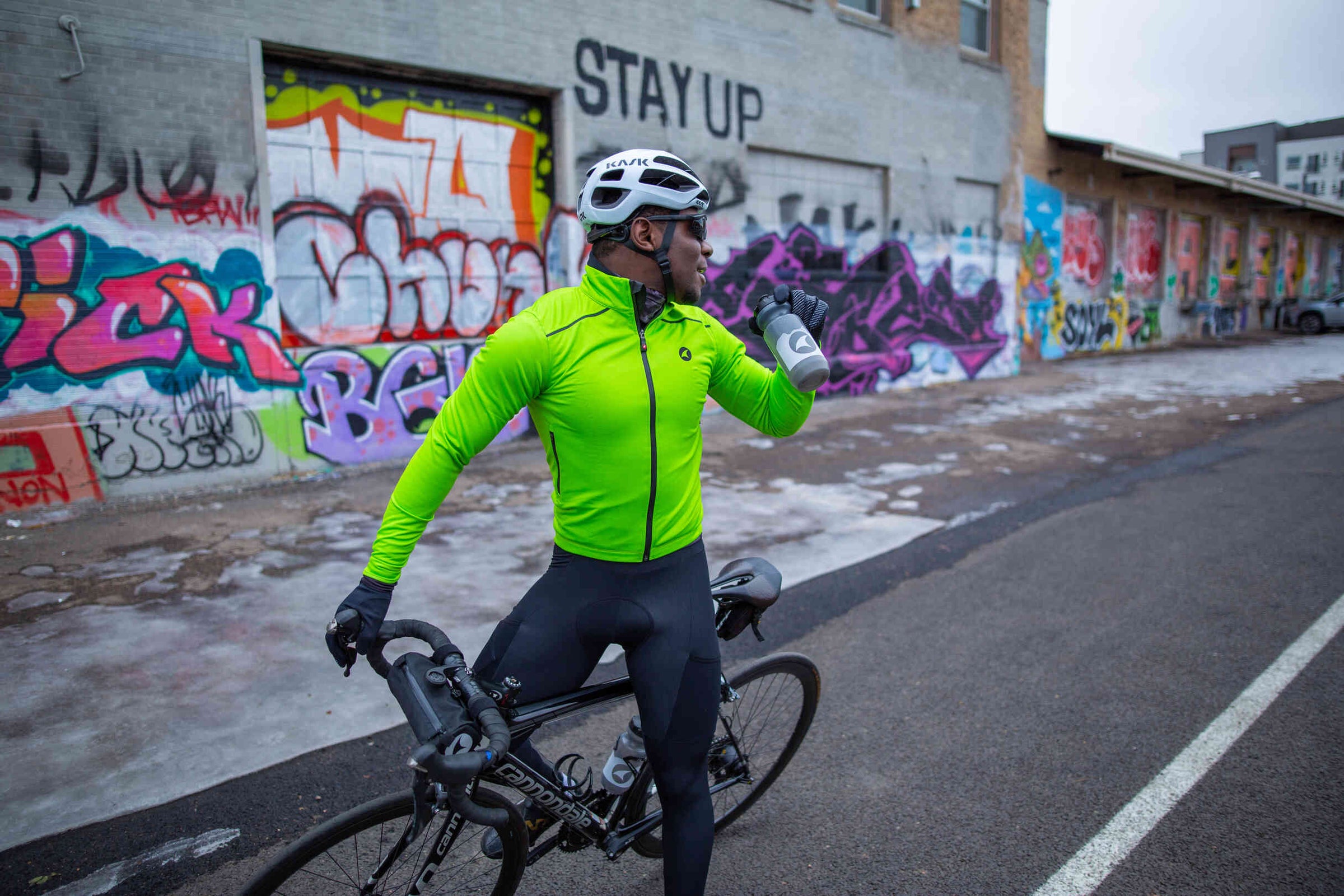
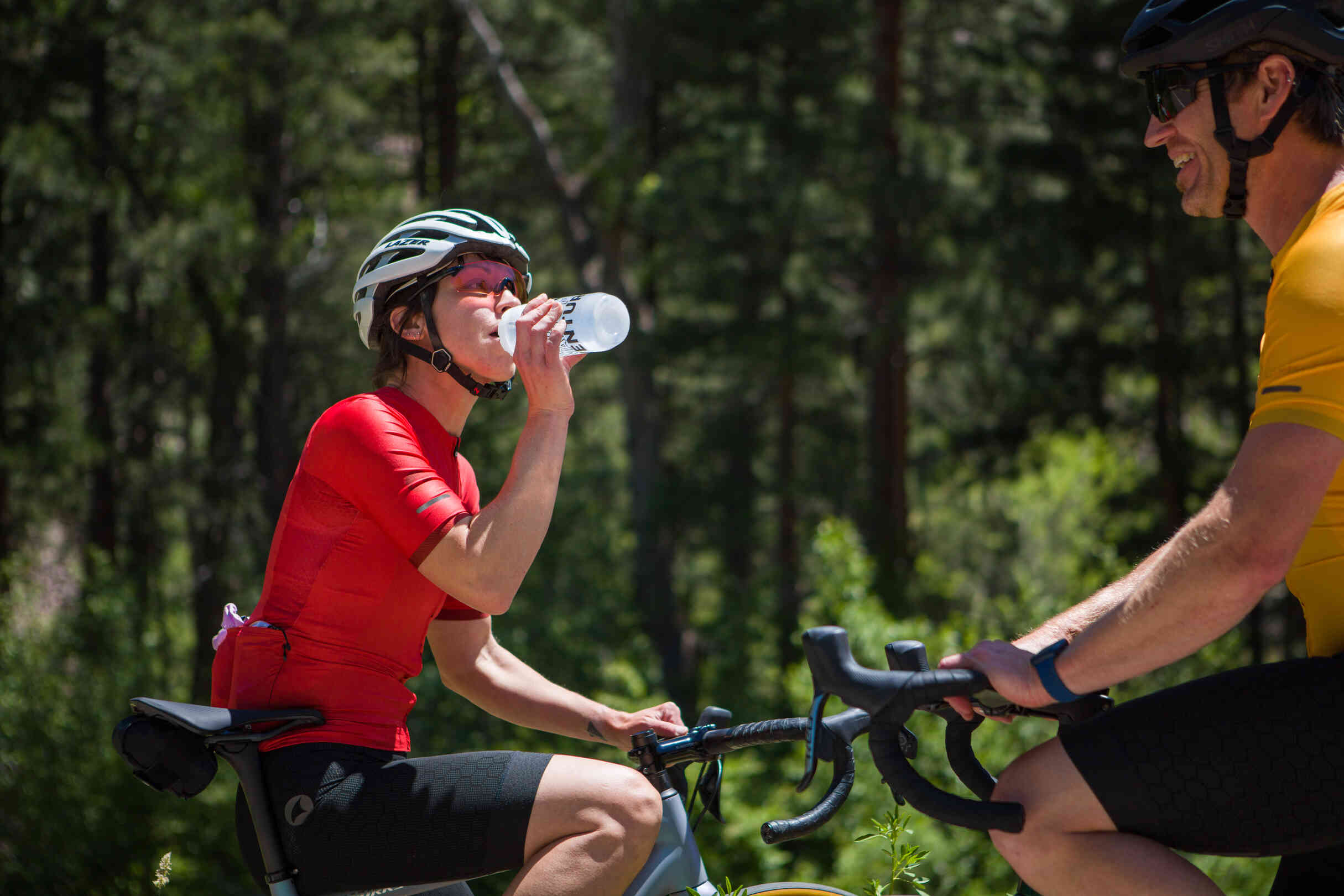
two cyclists on a dirt path, one drinking from a water bottle
The Complete Guide

How to Stay Hydrated
While Cycling

What You’ll Learn

In this guide you’ll discover:

  • How much to drink before, during, and after a ride
  • When plain water is enough—and when you need electrolytes
  • How ride length changes your hydration strategy
  • Common signs of dehydration
  • Simple ways to stay hydrated in hot and cold weather

________________________

How to Stay Hydrated While Cycling

Hydration isn’t just about avoiding thirst. It affects your power, endurance, focus, recovery, and even your enjoyment on the bike.

Whether you’re riding for 30 minutes or tackling an all-day adventure, understanding what, when, and how much to drink can help you perform better and recover faster.

Here’s everything you need to know.

Quick Hydration Guide

Ride Length What to Drink
Under 1 Hour Water is usually sufficient. Drink before your ride, sip regularly during it, and rehydrate afterward.
1–2 Hours Water plus electrolytes, especially in warm weather or if you're sweating heavily.
Over 2 Hours Water, electrolytes, and carbohydrates become increasingly important. Plan refill stops and drink consistently throughout your ride.

Why Hydration Matters

Water is involved in nearly every system that keeps you moving.

It helps:

  • Deliver oxygen and nutrients to your muscles
  • Regulate body temperature
  • Replace fluids lost through sweat
  • Support cardiovascular function
  • Improve concentration and reaction time

Even mild dehydration can increase perceived effort and reduce performance, especially during longer rides or hot weather.  

One important thing to remember:

If you’re waiting until you’re thirsty, you’re probably already behind.
Winter Cycling Hydration Tips

Before Your Ride

Start hydrated.

For most cyclists that means drinking approximately 16–20 ounces (500–600 mL) of water during the couple of hours before riding.

If it’s particularly hot, you’re riding at altitude, or you know you’re a heavy sweater, you may benefit from including an electrolyte drink before heading out.  

During Your Ride

RIDES UNDER ONE HOUR

For shorter rides in moderate temperatures, plain water is usually enough.

Carry one bottle and take regular sips every 10–15 minutes rather than waiting until you’re thirsty.  

RIDES BETWEEN ONE AND TWO HOURS

As ride duration increases, your body begins losing meaningful amounts of sodium and carbohydrates through sweat and exercise.

This is a good time to introduce an electrolyte drink or hydration mix, particularly on warm days.

Aim to sip consistently rather than drinking large amounts all at once.

RIDES LONGER THAN TWO HOURS

Long rides require more planning.

You’ll likely need:

  • Water
  • Electrolytes
  • Carbohydrates
  • Planned refill stops

Many cyclists carry one bottle of water and one bottle containing an electrolyte mix, refilling along the route as needed. 
Water vs. Electrolytes

A common question is:

“Do I really need sports drinks?”

Not always.

Water is usually enough when:

  • Your ride is under one hour
  • Temperatures are moderate
  • Intensity is relatively easy

Electrolytes become increasingly helpful when:

  • Riding longer than an hour
  • It’s hot or humid
  • You’re sweating heavily
  • You’re riding multiple days in a row

Electrolytes help replace sodium lost through sweat and improve fluid absorption.

How Much Should You Drink?

There isn’t one perfect number. A good starting point is:

One standard cycling bottle (16–20 ounces / 500–600 mL) every hour, adjusting upward in hot weather or if you naturally sweat more.

Use this as a starting point—not a rule. Every rider is different.

Hydration isn’t something you fix after a ride—it’s something you build before the first pedal stroke.

Signs You’re Becoming Dehydrated

Watch for:

  • Dry mouth
  • Fatigue
  • Elevated heart rate
  • Headache
  • Muscle cramps
  • Dark urine after your ride
  • Feeling unusually hot

If several of these appear together, slow down, find fluids, and cool your body.

Cycling Water Bottles
Water Bottle Collection
Shop All

Don’t Forget Cold Weather

One of the biggest hydration mistakes happens during winter.

Because you sweat less—or at least don’t notice it—you may drink far less than your body needs.

Cold, dry air still increases fluid loss through breathing, and layered clothing can hide how much you’re sweating.

Your hydration strategy shouldn’t disappear just because the temperature drops. 

Recover After Your Ride

Recovery begins before you unclip.

Within the first 30–60 minutes after finishing:

  • Drink water
  • Replace electrolytes if needed
  • Eat carbohydrates and protein
  • Continue sipping fluids during the next few hours

Good recovery starts with replacing what you’ve lost.

Common Hydration Mistakes

Avoid these common errors:

❌ Waiting until you’re thirsty
❌ Drinking only after the ride
❌ Forgetting electrolytes on long rides
❌ Ignoring hydration during winter
❌ Trying a new drink on event day

Infographic showing a cycling hydration cheat sheet with before, during, and after ride hydration tips, including when to drink water, when to add electrolytes, how often to sip fluids, and post-ride recovery recommendations.

FAQs

A good starting point is one standard cycling bottle (16–20 ounces / 500–600 mL) per hour, adjusting based on weather, ride intensity, and your individual sweat rate.

Electrolytes become increasingly beneficial for rides lasting longer than an hour, hot conditions, or whenever you’re sweating heavily. 

Yes. Many cyclists drink less during winter rides even though they’re still losing fluid through sweat and breathing.  

Many sports nutrition experts recommend sipping regularly throughout your ride instead of relying solely on thirst, especially during longer efforts. 

Generally no. For rides under an hour in moderate conditions, plain water is usually sufficient.