Tips & Advice

The Honest Case for Expensive Kit

What's actually worth spending money on, what's mostly marketing, and when the cheap stuff is genuinely fine.

Let's start with something most cycling apparel brands won't say: not everything expensive is worth it. Some premium gear is priced that way because of a logo. Some budget gear performs remarkably well. And there are categories where the difference between a $40 piece and a $200 piece is largely imaginary.

We're going to be straight with you about all of it — including the categories where spending more genuinely, measurably matters. Because if you understand why certain things cost what they cost, you make better decisions. And you end up spending money in the places where it actually improves your time on the bike.

Here's the honest breakdown.

Where Expensive Kit Is 100% Worth It: Bibs

If there is one category where we will argue without hesitation that you should spend real money, it's bib shorts. This is not a brand pitch. It is a physiological fact.

The chamois — the pad inside your bibs — is the single piece of equipment that determines whether a long ride is enjoyable or miserable. And chamois quality does not scale linearly with price. The difference between a $40 chamois and a $180 chamois is not subtle. It is the difference between saddle sores and no saddle sores. Between finishing a century feeling fine and spending the last 30 miles shifting constantly and counting miles.

What you're actually paying for at the high end is the chamois construction and the quality of the pad material itself. Premium chamois use multi-density foam with anatomically mapped zones — thicker where pressure is greatest, thinner and more flexible where you need range of motion. Cheaper chamois tend to be uniform foam, often too thick in the wrong places, which actually increases friction rather than reducing it.

The fabric matters too. High-end bib fabrics are engineered to compress in specific directions, move moisture away from skin aggressively, and maintain their structure over hundreds of wash cycles. Cheap Lycra stretches out, loses compression, and starts to chafe at the seams after a season.

How much to spend: For recreational riders doing rides up to two hours, a mid-range bib ($120–$180) with a decent chamois is probably sufficient. For anyone regularly doing rides over three hours, or riding multiple days back to back, spending $200–$280 on bibs is not extravagance — it's injury prevention.

What to look for: A chamois designed specifically for your anatomy (men's and women's pads are different and genuinely not interchangeable), minimal seaming in the seat area, and Italian-made padding from manufacturers like Elastic Interface®, who are widely regarded as the industry standard.

Where It Gets More Complicated: Jerseys

Jerseys are trickier, because the case for expensive depends heavily on how and where you ride.

On the pure performance side, premium jersey fabrics do offer real advantages. High-end aerodynamic jersey fabrics make a measurable difference in drag — which matters if you're racing or chasing PRs. Advanced moisture management fabrics like 37.5® technology actively work to pull moisture away from your skin and accelerate evaporation, which keeps you cooler in heat and warmer in cold. These are not marketing claims. They're measurable material properties.

But here's the honest part: if you're riding at a comfortable pace on group rides, commuting, or doing casual weekend mileage, you will not notice the aerodynamic difference. The thermal and moisture management improvements are real but incremental. A $100 jersey from a reputable brand will keep you comfortable and functional.

Where spending more on a jersey is clearly worth it: technical fabrics for extreme conditions (very hot, very cold), and fit. A jersey that fits properly — no excess fabric flapping, no pulling at the shoulders, no bunching at the waist — makes a genuine difference in both comfort and performance. And achieving a good technical fit requires better construction, which costs money.

What's mostly marketing: The extreme end of 'aero' jersey pricing often reflects wind tunnel testing that was done on professional riders in race conditions. That data doesn't translate to the Saturday group ride. If a jersey costs $300 because it saved a professional 14 watts in a tunnel, that's a real number — for that rider, at that speed, in that position.

Where Cheap Kit Is Genuinely Fine

Socks. The performance difference between a $10 pair and a $30 pair is real but small. Buy what you like, wash them well, replace them when they lose elasticity.

Casual base layers for mild conditions. A lightweight wicking base for a cool morning ride doesn't require aerospace engineering. A decent mid-layer from any reputable brand will do the job.

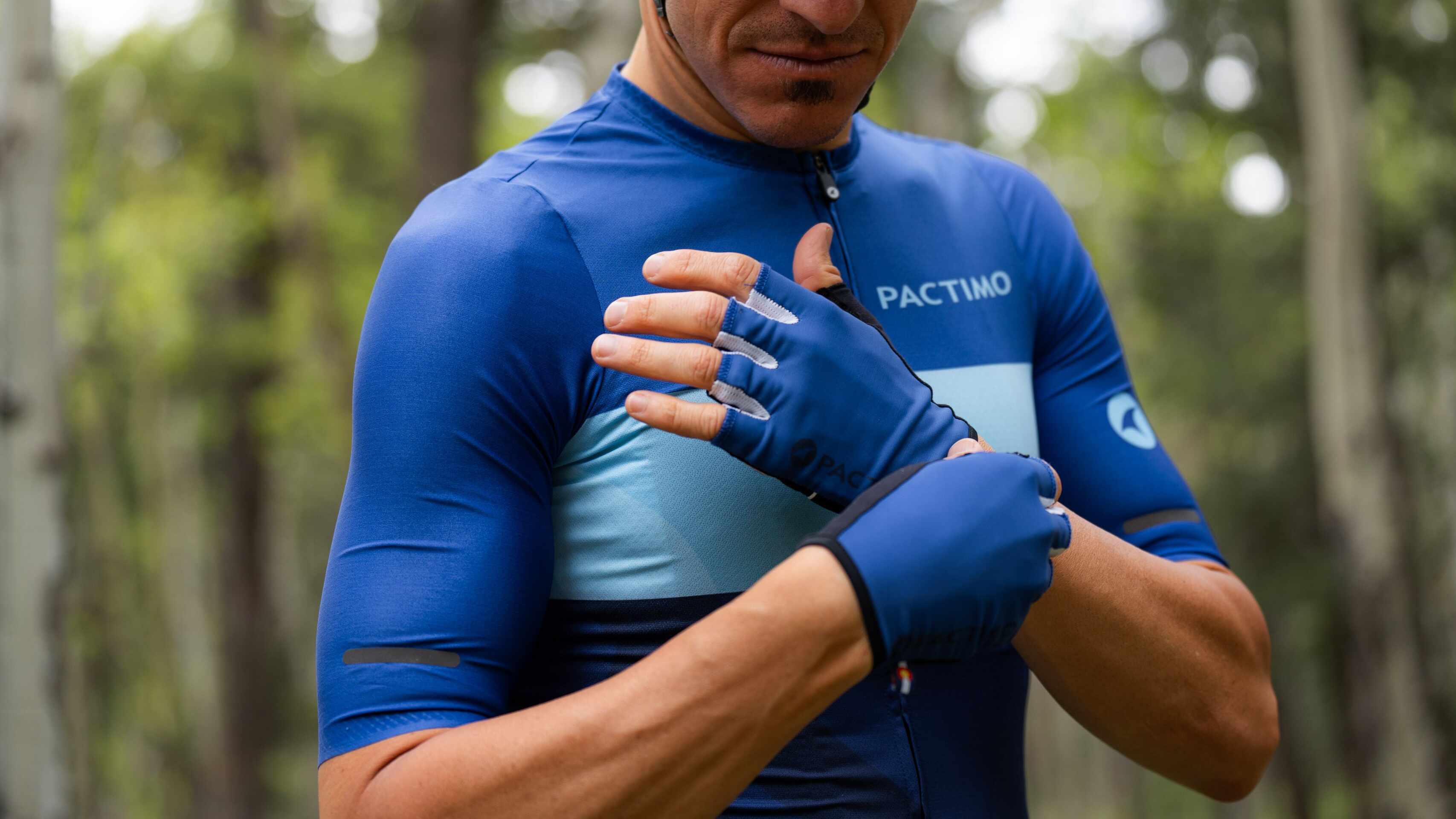
Gloves for summer riding. Full-finger winter gloves matter a lot more — you want actual insulation and wind protection. But short-finger summer gloves are mostly about handlebar padding and sweat management. Mid-range is fine.

Caps. A cycling cap is a cycling cap. It keeps the sun out of your eyes and sweat off your face. The $15 one does this as well as the $40 one.

Weather Protection: Where Cheap Genuinely Fails

A rain jacket is another category where the price gap reflects a real performance gap — and where buying cheap can make a ride actively miserable rather than just slightly less comfortable.

The problem with inexpensive rain jackets is the membrane. Cheap waterproof fabrics either stop water but trap all your body heat and moisture inside (you end up soaked from sweat rather than rain), or they breathe adequately but start letting water through after an hour. Premium waterproof-breathable fabrics use membranes that genuinely do both — block incoming rain while letting vapor escape outward.

This isn't trivial. Getting cold and wet in the mountains or on a long road ride isn't just uncomfortable. It's a safety issue. A jacket that fails in bad conditions is worse than no jacket at all, because you planned around it.

The same principle applies to serious winter kit — thermal bibs, insulated jackets, wind vests for cold descents. These items need to perform reliably in conditions where failure has real consequences. This is not the category to optimize on price.

One genuine exception: if you live somewhere with mild, predictable rain and you're only riding in town, a $99 packable rain jacket is probably fine. Buy the premium stuff for the rides where conditions are variable and getting cold is a real risk.

The Math Most People Get Wrong: Cost Per Ride

Here's the calculation that changes how most cyclists think about expensive kit: cost per ride.

A $70 pair of bibs that wears out or starts chafing after 100 rides costs you 70 cents per ride. A $200 pair that stays comfortable and structurally intact for 400 rides costs only 50 cents per ride — and those 400 rides were significantly more comfortable.

Premium cycling apparel is made to last. Better fabrics hold their elasticity longer. Better construction means stitching that doesn't fail, chamois that don't delaminate, zippers that don't corrode. The environmental math works out better too — buying one thing that lasts three seasons beats buying three cheap things.

This is not universally true. Some expensive brands do charge for the name and not the durability. Read reviews. Look for brands with strong return policies and real customer service. Longevity should be demonstrable, not just claimed.

The Bottom Line

Spend real money on bibs. This is the one category where the quality difference is direct, physical, and impossible to ignore on long rides. Don't compromise here.

Spend thoughtfully on jerseys. Consider where and how you ride. If you're chasing performance in variable conditions, premium fabrics earn their price. If you're mostly doing recreational miles in moderate weather, mid-range is honest value.

Spend seriously on weather protection. A jacket that fails in the rain or the cold has no value. In fact, it has negative value — it gives you false confidence.

Don't overspend on accessories. Socks, caps, and casual warm-weather gloves are not worth a significant premium. Buy what you like and what fits.

And finally: ignore the hype around technology you can't feel.

Aerodynamic fabrics matter at racing speeds. Marginal gains from premium materials at recreational pace are real but small. Know what you're buying and why.

The goal isn't to spend the most. It's to spend in the right places — so that the hours you put into cycling are as good as they can be.