
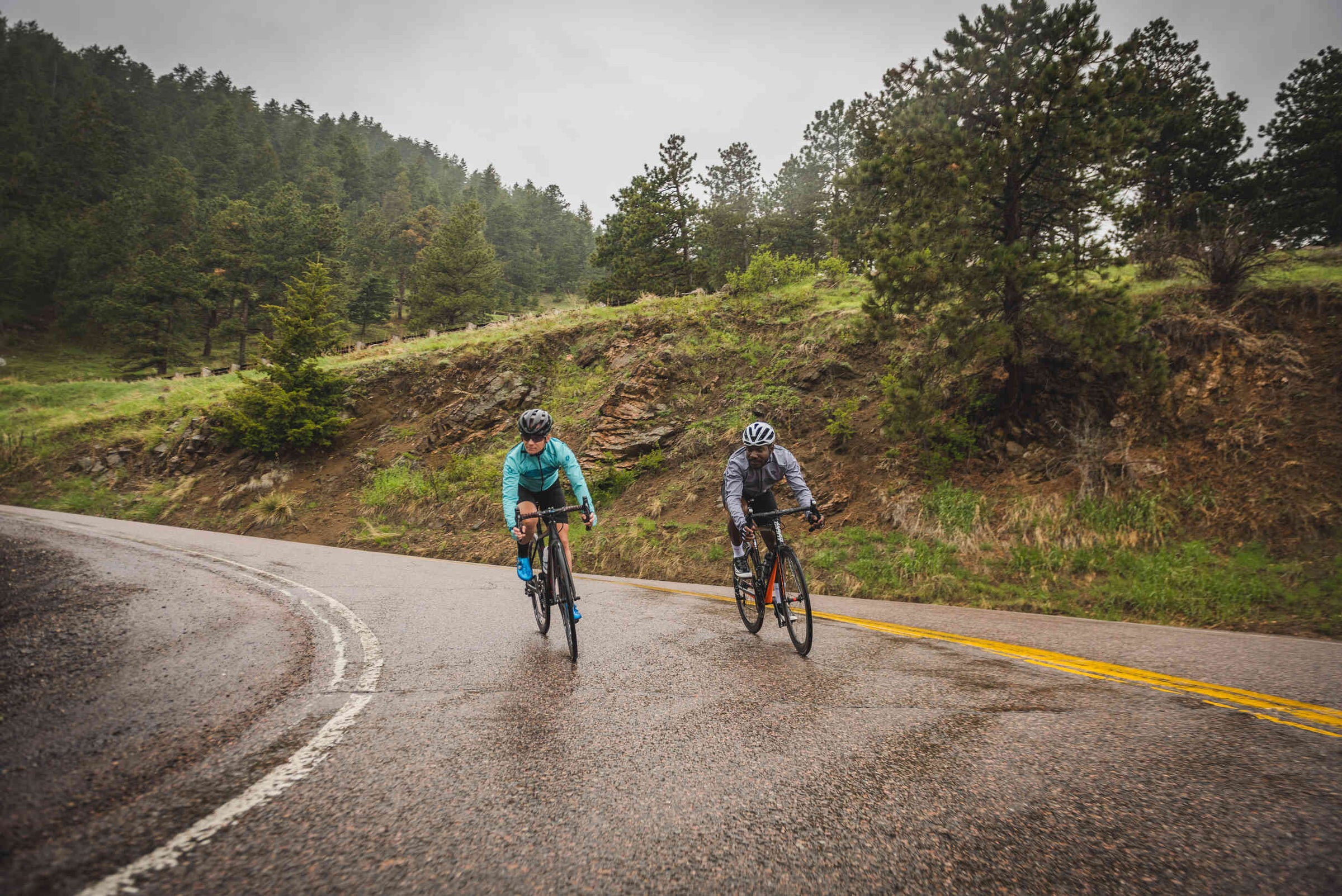
Two cyclists descending a mountain road in the rain
8 Wet Weather Cycling Tips

How to Ride a Road Bike
Safely in the Rain

What You’ll Learn

In this guide you’ll discover:

  • How to brake and corner safely on wet roads
  • Which road hazards become especially slippery in the rain
  • What clothing makes rainy rides more comfortable
  • How to improve your visibility in poor weather
  • What to do after every wet-weather ride to protect your bike

_______________________

8 Wet Weather Cycling Tips

Rain doesn’t have to end your ride. With the right mindset, a few adjustments to your riding technique, and the proper gear, cycling in wet conditions can be safe, comfortable, and surprisingly enjoyable.

Whether you’re caught in an unexpected shower or intentionally heading out despite the forecast, these eight tips will help you ride with greater confidence when the roads are wet.

Wet Weather Riding Quick Reference

Situation Best Practice
Braking Brake earlier and apply both brakes progressively
Cornering Slow before the turn and avoid braking mid-corner
Painted Lines Cross them as upright as possible
Metal Covers & Tracks Avoid whenever you can
Visibility Wear bright colors and use daytime flashing lights
Following Distance Leave more room than usual
Tire Pressure Slightly lower pressure can improve grip
After the Ride Clean and lubricate your drivetrain
a female cyclist in the rain with a Pactimo Ultra-Lite Rain Jacket

1. Brake Earlier and More Smoothly

Your tires have less grip on wet pavement, which means stopping distances increase.

Instead of grabbing the brakes at the last second, begin braking earlier and apply pressure progressively with both brakes. Smooth braking helps maintain traction and keeps the bike stable.

If you’re approaching a corner, finish most of your braking before you lean into the turn.

2. Corner with Confidence—Not Aggression

Many riders become nervous in the rain and either brake in the middle of corners or steer too abruptly.

Instead:

  • Reduce speed before the corner.
  • Look through the turn.
  • Lean the bike smoothly.
  • Avoid sudden steering corrections.
  • Wait until you’re upright before accelerating.

Rain rewards smooth riders.

Smooth riders become safer riders—and wet roads reward smoothness more than speed.
a male cyclist riding in the Colorado mountains during a rian storm

3. Watch for Slippery Road Hazards

Not all wet pavement provides the same grip. Be especially cautious around:

  • Painted lane markings
  • Railroad tracks
  • Steel bridge grates
  • Manhole covers
  • Wet leaves
  • Oil buildup near intersections

Whenever possible, cross these surfaces while riding as upright as possible and avoid sudden braking or turning while on them.

Rain doesn’t make cycling dangerous. Riding the same way you do on dry pavement does.

4. Increase Your Following Distance

Wet roads mean everyone takes longer to stop—including you.

Leave additional space between yourself and:

  • Other cyclists
  • Cars
  • Pedestrians

That extra room gives you more time to react to unexpected obstacles or sudden stops.

A female cyclist wearing the Pactimo Ultra-Lite Rain Jacket hile riding in the rain
A male cyclist wearing a blue Torrent Rain Jacket from Pactimo while riding in the rain

5. Dress for the Conditions

Staying dry isn’t always possible—but staying comfortable is. A few key pieces of apparel make a huge difference:

A packable cycling vest can also provide extra warmth during cool descents or changing weather without adding much bulk.

6. Make Yourself Easy to See

Rain reduces visibility for everyone. Help drivers notice you by:

  • Wearing bright colors
  • Using reflective details
  • Running front and rear flashing lights—even during daylight
  • Making eye contact whenever possible at intersections

Never assume you’ve been seen.

7. Take Care of Your Bike After Every Wet Ride

Rain accelerates wear on your drivetrain.

After riding:

  • Rinse away grit if necessary.
  • Dry the chain and drivetrain.
  • Lubricate the chain with an appropriate lubricant.
  • Check your brake pads for excessive wear.

A few minutes of maintenance can dramatically extend the life of your components.

A female cyclist wearing the Pactimo Ultra-Lite Rain Jacket in the rain

8. Don’t Be Afraid of Riding in the Rain

Many cyclists avoid rain altogether. That’s understandable—but learning to ride confidently in wet conditions builds skills that transfer to every ride.

  • You’ll become smoother with your braking.
  • More deliberate in your cornering.
  • More aware of road hazards.
  • And ultimately, a more confident cyclist.

Rain doesn’t have to stop you from riding. It simply asks you to ride differently.

Common Wet Weather Riding Mistakes

Avoid these common errors:

❌ Braking hard in corners
❌ Following too closely
❌ Riding over painted lines while leaned over
❌ Forgetting daytime running lights
❌ Skipping bike cleaning afterward

Small adjustments make a big difference.

Infographic featuring a wet weather cycling checklist with before, during, and after ride tips, including checking tire pressure, braking early, avoiding slippery road hazards, increasing visibility, and cleaning your bike after riding in the rain.

FAQs

Yes. Riding in wet conditions can be safe when you reduce speed, brake earlier, avoid slippery surfaces like painted lines and metal covers, and wear appropriate clothing.

A slight reduction in tire pressure may improve traction on wet pavement. Just avoid lowering pressure so much that it increases the risk of pinch flats or poor handling.

Disc brakes generally provide more consistent braking performance in wet conditions because they are less affected by water on the braking surface.

Look for a lightweight waterproof cycling jacket, quality gloves, bright colors, clear lenses, and daytime flashing lights to improve both comfort and visibility.

Clean your drivetrain, dry your bike, inspect your brake pads, and apply fresh lubricant to your chain. Regular maintenance helps prevent premature wear and corrosion.